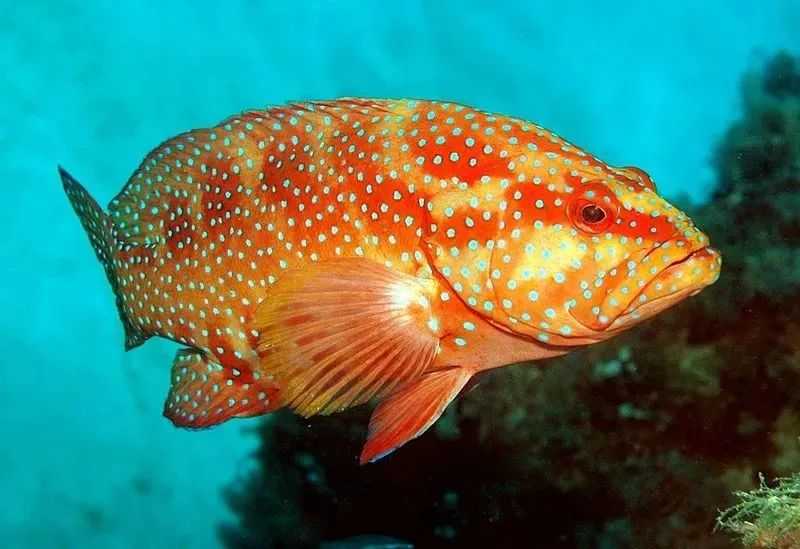
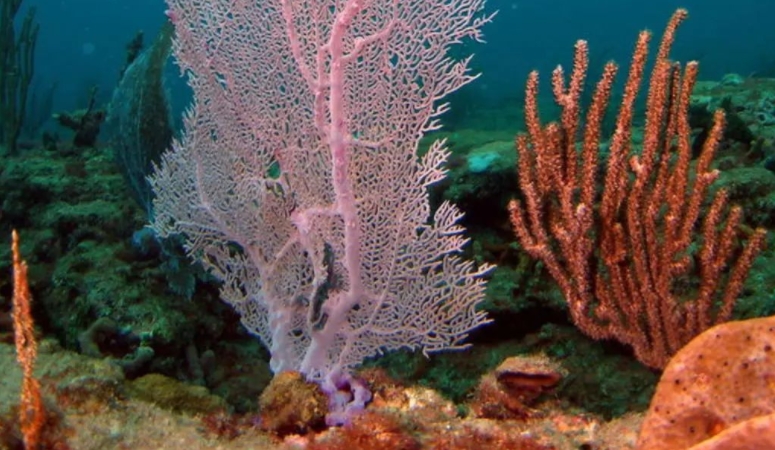
Plectropomus leopardus, commonly known as the East Star grouper, is a visually arresting marine fish renowned for its vibrant colors and distinctive patterns. Belonging to the family Serranidae, this species inhabits the coral reefs of the Indo-Pacific region, captivating both divers and seafood connoisseurs with its appearance and culinary value. Its name stems from the leopard-like spots and intricate patterns that adorn its body, creating a mesmerizing display against the backdrop of underwater landscapes.
The East Star grouper showcases a palette of vivid hues, ranging from fiery reds and oranges to deep purples, with each individual specimen bearing a unique constellation of white or yellow spots. Growing up to 1 meter in length, these groupers have a robust, streamlined body designed for efficient swimming and ambush predation. They primarily prey on smaller fish, crustaceans, and cephalopods, using their powerful jaws to capture prey hiding among the coral. During the day, they often rest in crevices or caves, emerging at night to hunt, taking advantage of the cover of darkness to surprise their prey.
Despite its adaptability to reef environments, Plectropomus leopardus faces significant threats. Highly prized in the luxury seafood market, especially in Asia, where its tender flesh is considered a delicacy, the species has suffered from overfishing. Its slow growth rate and late sexual maturity make it particularly vulnerable to population decline. Additionally, habitat degradation due to coral bleaching and coastal development further endangers its survival. Listed as "Vulnerable" on the IUCN Red List, conservation efforts, including fishing regulations and marine protected areas, aim to safeguard this iconic species. Preserving the East Star grouper is not only crucial for maintaining the biodiversity of coral reef ecosystems but also for ensuring the long-term viability of a fish that symbolizes the ocean’s natural beauty and ecological importance.