The Skeleton Panda Sea Squirt: A Quirky Marine Marvel
June 23, 2025, 3:06 pm EDT
Marine Biology| Sea Animals , Aquatic Organism , Rare Organism
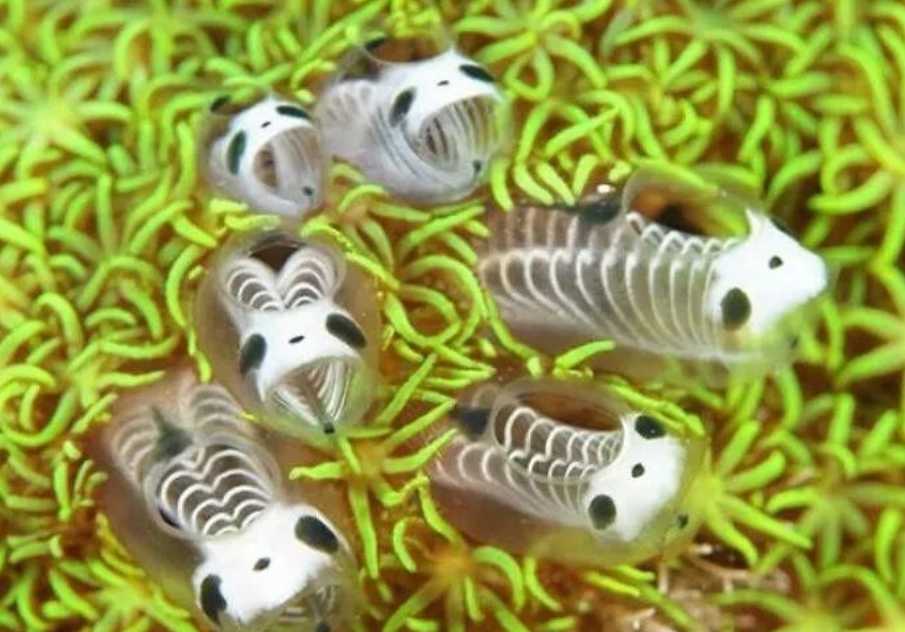
The skeleton panda sea squirt (Clavelina ossipandae) is a newly discovered marine species that has taken the scientific world by storm.
- Discovery: First spotted by Japanese scuba divers near Kumejima Island in Okinawa, its photos went viral online around 2017. In 2024, Japanese scientists officially identified it as a new species.
- Name: The genus name "Clavelina" means "little bottle" in Latin, and the species name "ossipandae" means "bones and panda", referring to its bone - like white parts and panda - like black markings.
- Size: It is less than 2 centimeters long, a tiny creature in the ocean1.
- Color and Shape: The white, bone - like parts are actually blood vessels running horizontally through the sea squirt's gills1. The black markings on the head, resembling a panda's eyes and nose, give it a cute and distinctive look1. Its transparent body, combined with the black - and - white markings, creates an uncanny resemblance to a skeleton, making it both adorable and eerie.
- Feeding: Like other sea squirts, it is a filter - feeding marine invertebrate. It attaches to substrates such as coral reefs in waters about 20 meters deep and pumps water through a siphon - like structure to filter out nutrients from the water.
The skeleton panda sea squirt is not only a unique and interesting species in the ocean but also a reminder of the vast biodiversity that remains to be discovered and protected in our world's oceans.